
|
|
| • | In the older days, mothers made a tea from the Pride Of Barbados flowers and leaves for their babies as it helped them sleep and in some cases was used instead of milk at night for babies |
| • | The juice from the leaves is said to cure fever, the juice from the flower is said to cure sores, and the seeds are said to cure bad cough, breathing difficulty, and chest pain |
| • | In Suriname's traditional medicine the leaves of this plant are said to be a purgative and are used against kidney stones, malarial fever and bronchitis. It is also said to be an anti-inflammatory, antimicrobial and helpful against staphylococcus and that it destroys cancerous cells The Pride of Barbados plant contains compounds that have powerful antiviral benefits that are especially effective against human herpes viruses and adenoviruses which cause the common cold. It prevents these viruses from replicating. Other recent studies demonstrate that extracts from the flower, stem, leaf, fruit, root, and seed are also effective against wheezing, bronchitis, malarial infection, tuberculosis, other bacteria, fungi, and some parasites |
| • | This plant has parts which were used by the slave women to induce abortion. They often used the root of this plant to commit suicide in the hope of returning to their native land through reincarnation, so that they may live in freedom with their relatives and loved ones in Africa while their bodies die in slavery |
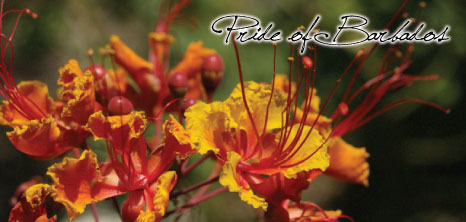
This pride of Barbados is certainly quite an ornamental plant that not only stands out as a major attraction across gardens in Barbados but also as a gentle reminder of the amazing power and strength that is associated with this wonder plant.